Selected Exhibitions
Six exhibitions across four countries.
Some frames traveled further than I did.
Selected
Exhibitions
Six exhibitions across four countries.
Some frames traveled further than I did.
Awita
Brooklyn, NY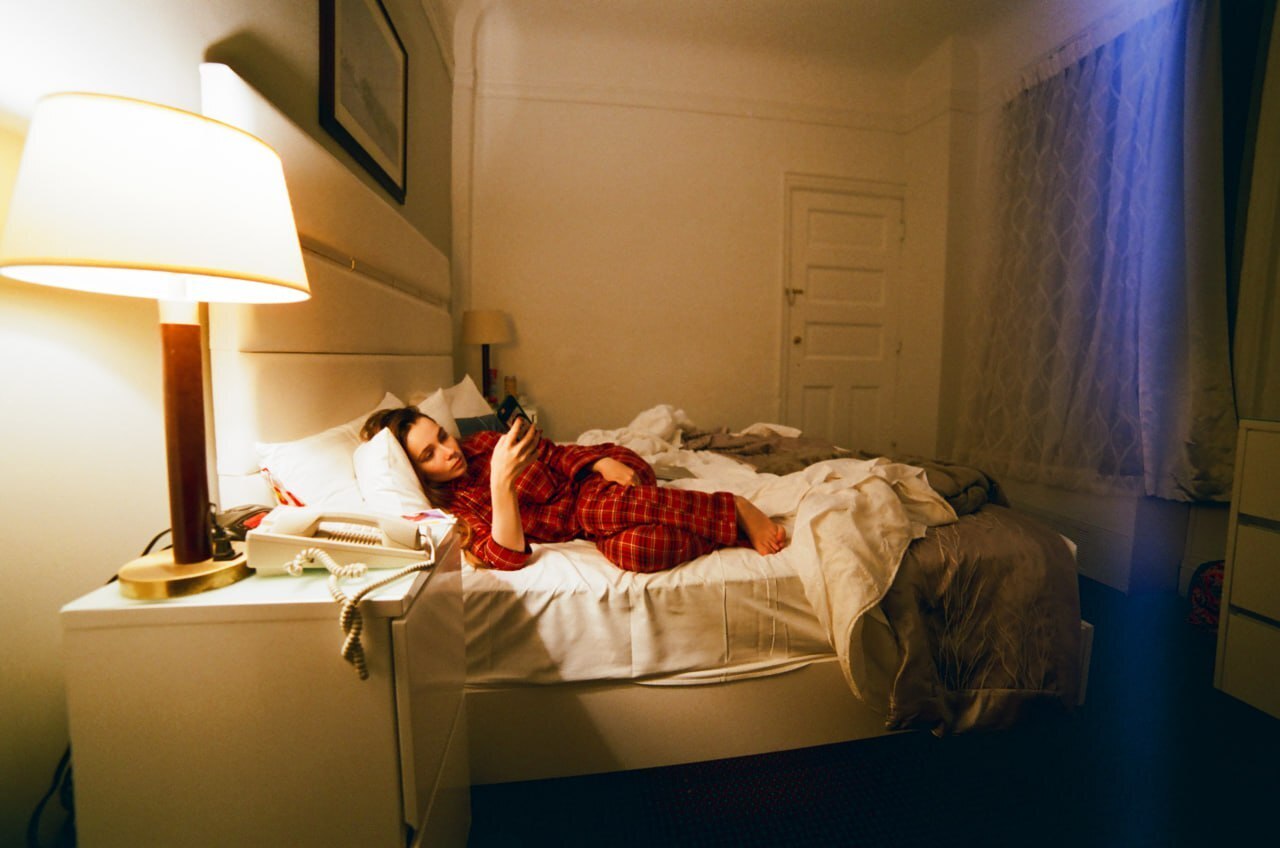


Out of significantly more submissions, 25 artists were selected for this show.
This is the one that made the cut: a hotel room lit by one warm lamp and one cold window, a woman mid-scroll on her phone, plaid pajamas, and cold night in Chicago.
Shot on a 20 mm lens, which explains the pull. Wide enough to catch the whole room without stepping back, close enough that the lamp still feels like it’s a few inches from the frame. The blue spilling in from the curtain fights the amber of the lamp for the whole shot, and Fuji’s X-Tra 400 renders both without picking a side.
Pinelo Art Gallery
Batumi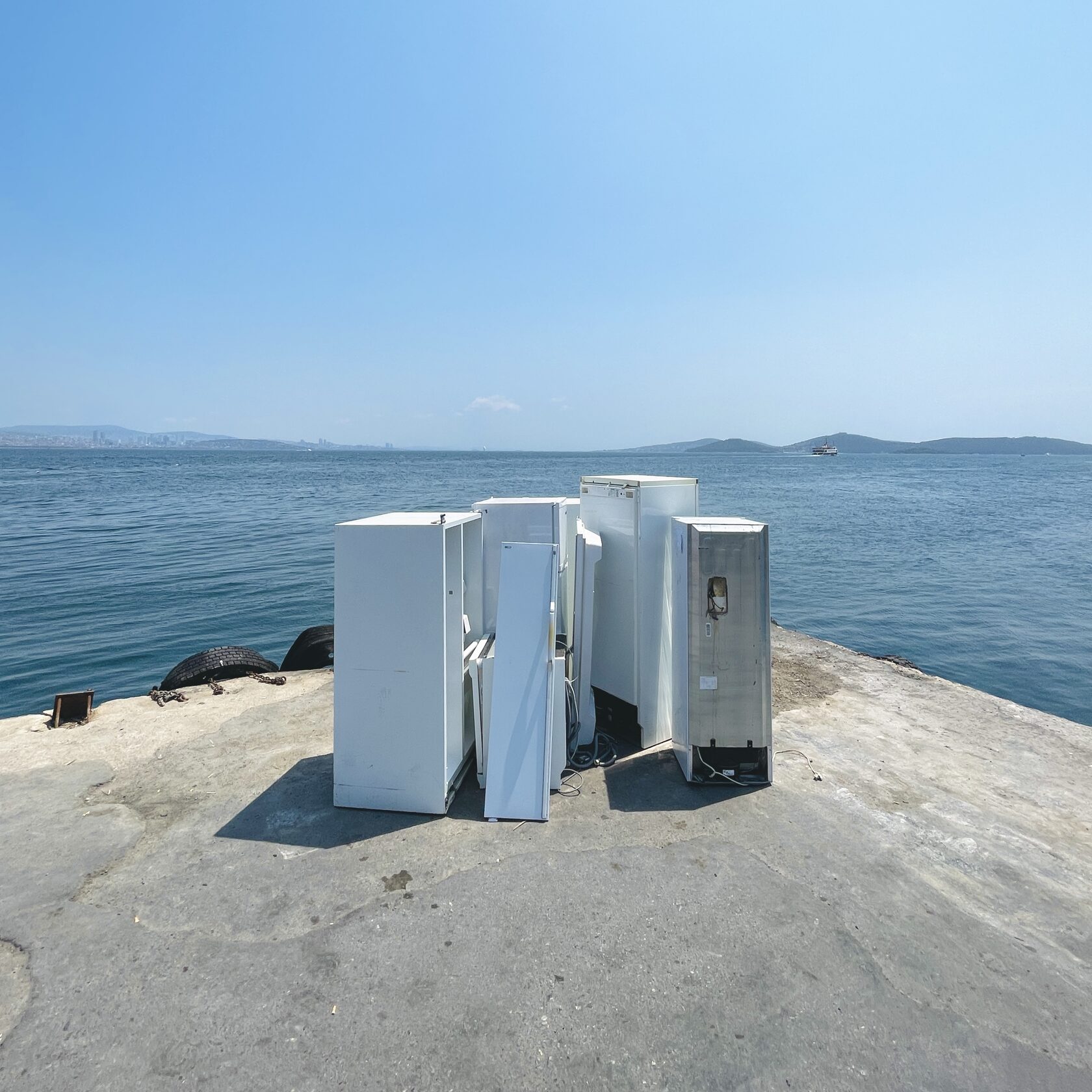
Pinelo Art Gallery
Batumi I chose this frame as a stand-in for unpredictability itself. Not staged, not composed around a concept, just an object completely out of place, doing nothing, meaning nothing, and somehow saying everything about how strange a familiar place
can turn the moment you actually look at it.
The print traveled from a pier on a small island near Istanbul to a gallery in Batumi.
Hung among work from dozens of artists across the world, in a large-scale international group exhibition where your work ends up a few feet from a religious icon painting on one side and an architectural study on the other, and somehow it all holds together anyway.


Happily Ever After
London, UK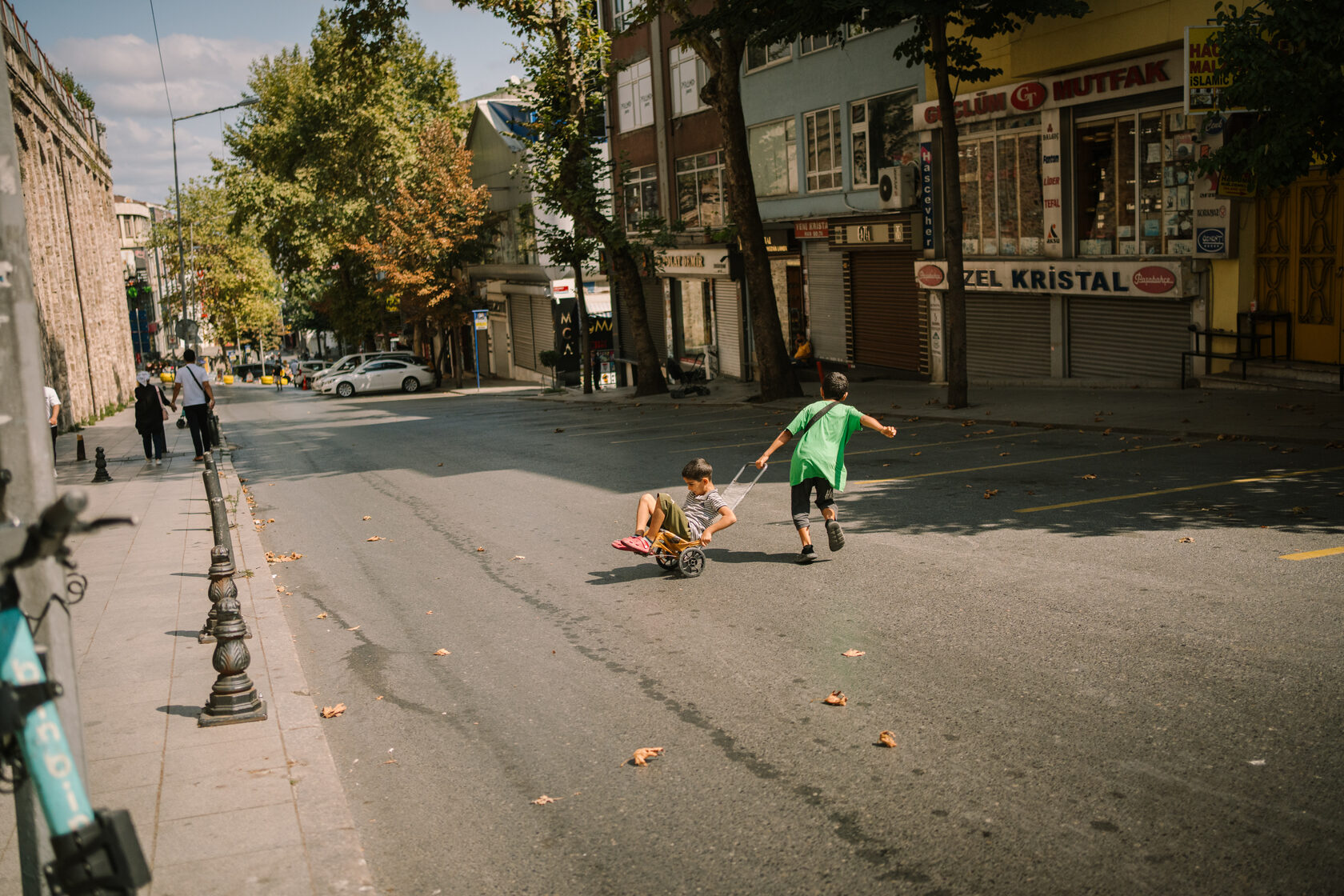
In a neighborhood this historic, there’s no lots of playgrounds. No mart, no fenced-off play area — just whatever’s actually on the street. So the street becomes the toy. A cart built for merchandise becomes a ride. The frame is a straight downward angle, shadows stretched long across the pavement, sunlight doing all the work a studio setup usually has to fake.
This is what "ever after" actually looks like most days. Not a resolution, not a wedding, not a moral. Just two kids finding more joy in a borrowed cart than most kids find in a screen. Submitted to an exhibition built around fairy-tale endings, this frame argued for a smaller, truer one: happiness doesn’t need a plot, a budget, or a playground. It just needs a street and someone to share it with.
A fairy tale needs an ending, and this exhibition asked over 30 international artists what theirs actually looks like. Six-month online programme, backed by fashion and lifestyle brands, curated around a single question dressed up as a children’s book.
LensCulture
Online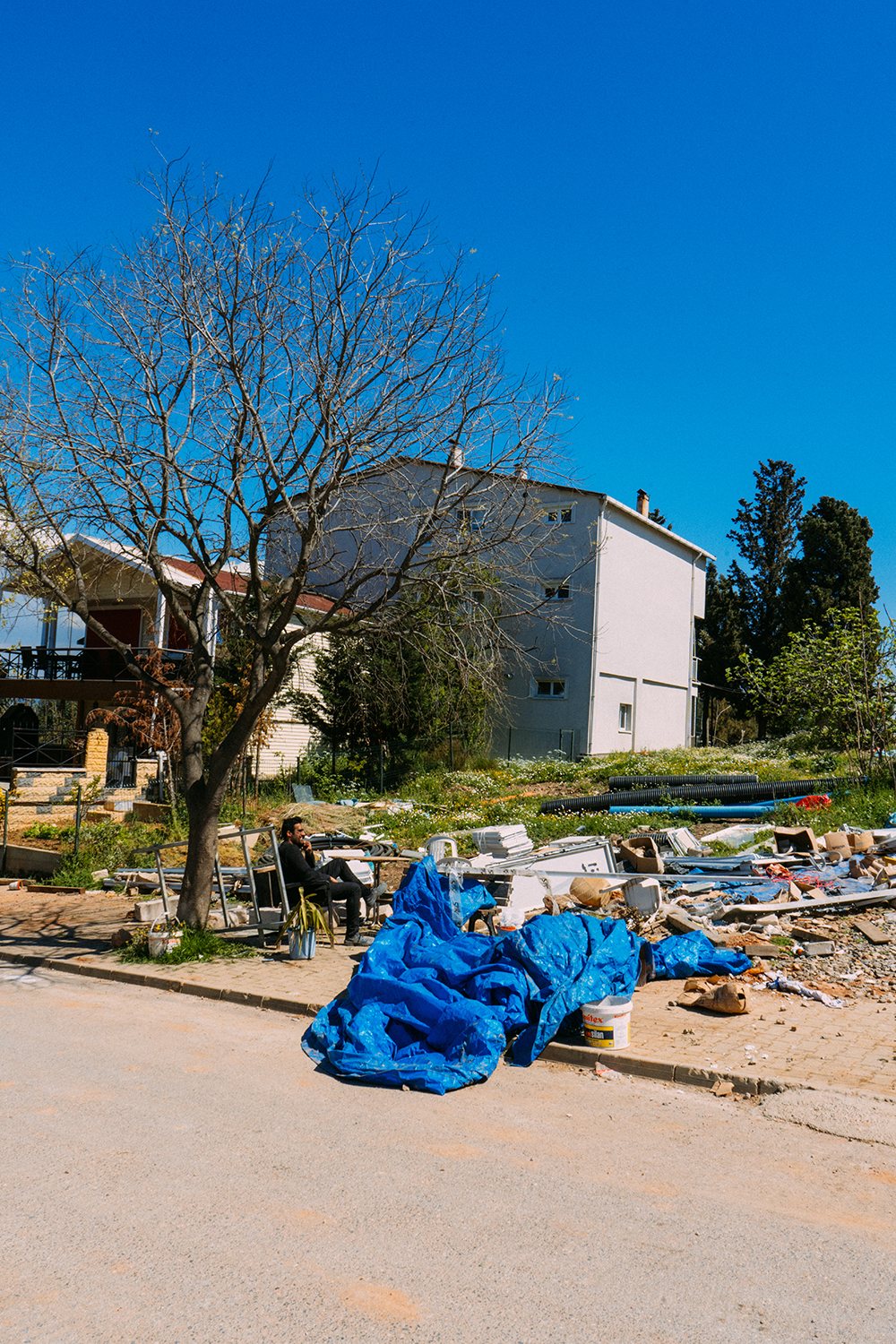
A man, a plastic chair, a house that doesn't exist yet.
LensCulture
Online A man, a plastic chair, a house that doesn't exist yet.
Nothing here is finished.
The tree hasn't leafed out yet. The house is still scaffolding and rubble.
The chair is the only actually functional object in the frame.
But he's already sitting there, already occupying a space that technically
doesn't exist as a home yet — claiming it before it's built.
This is a photograph about the gap between where you are and where you're going.
It was just a Tuesday on a construction site, someone waiting for a life to finish arriving.
F-Stop
Three features, one online zine.
F-Stop
Three features, one online zine.
Minimal
Galata Port, Istanbul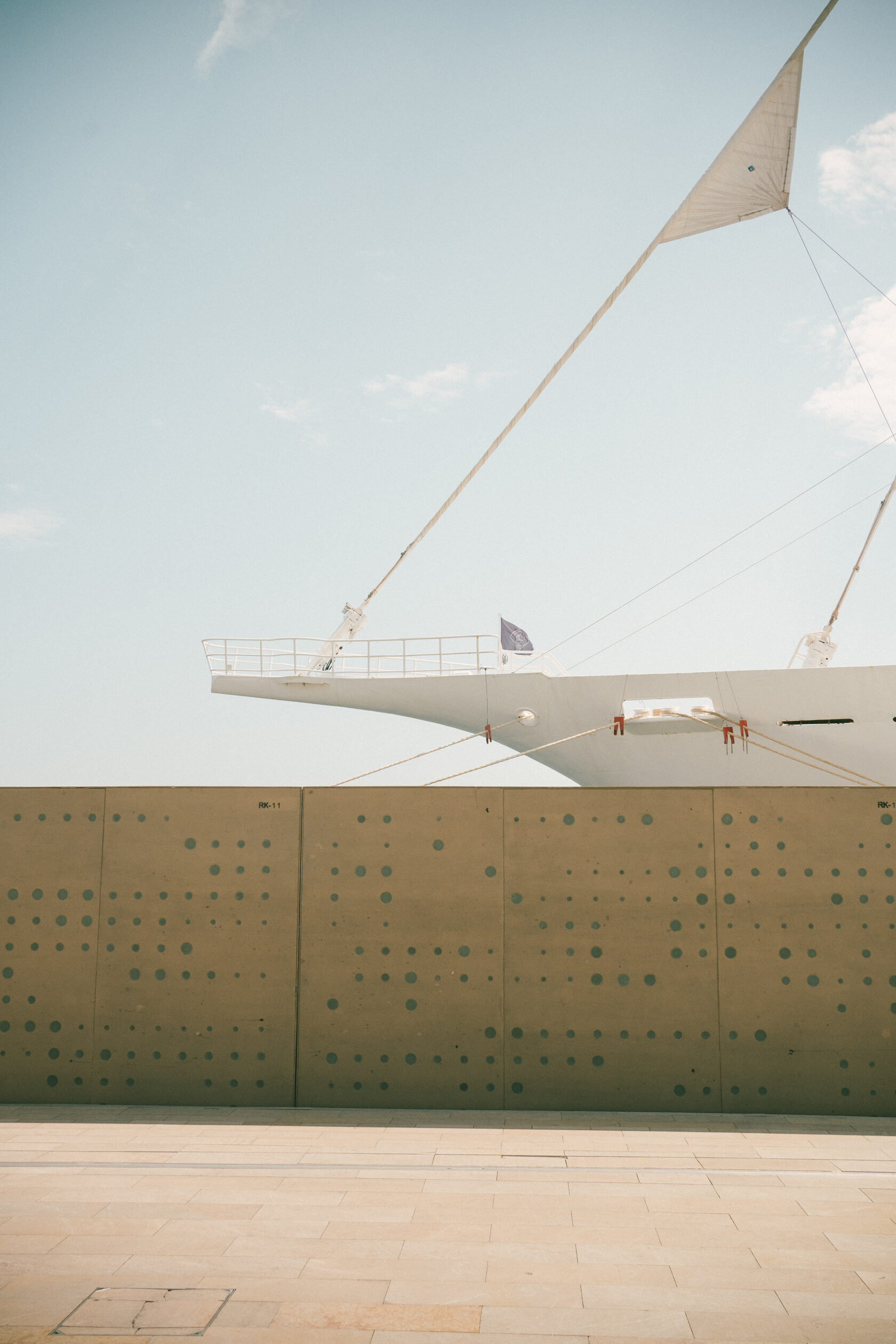
Shot about a year into living in Istanbul — the same year as a year of therapy. A fence stands between the frame and a cruise liner beyond it: luxury, just out of reach. Even in a moment of balance, the barrier is still there.
View on F-Stop MagazineMinimal
Galata Port, Istanbul Shot about a year into living in Istanbul — the same year as a year of therapy. A fence stands between the frame and a cruise liner beyond it: luxury, just out of reach. Even in a moment of balance, the barrier is still there.
View on F-Stop MagazineOpen Theme
Balat, Istanbul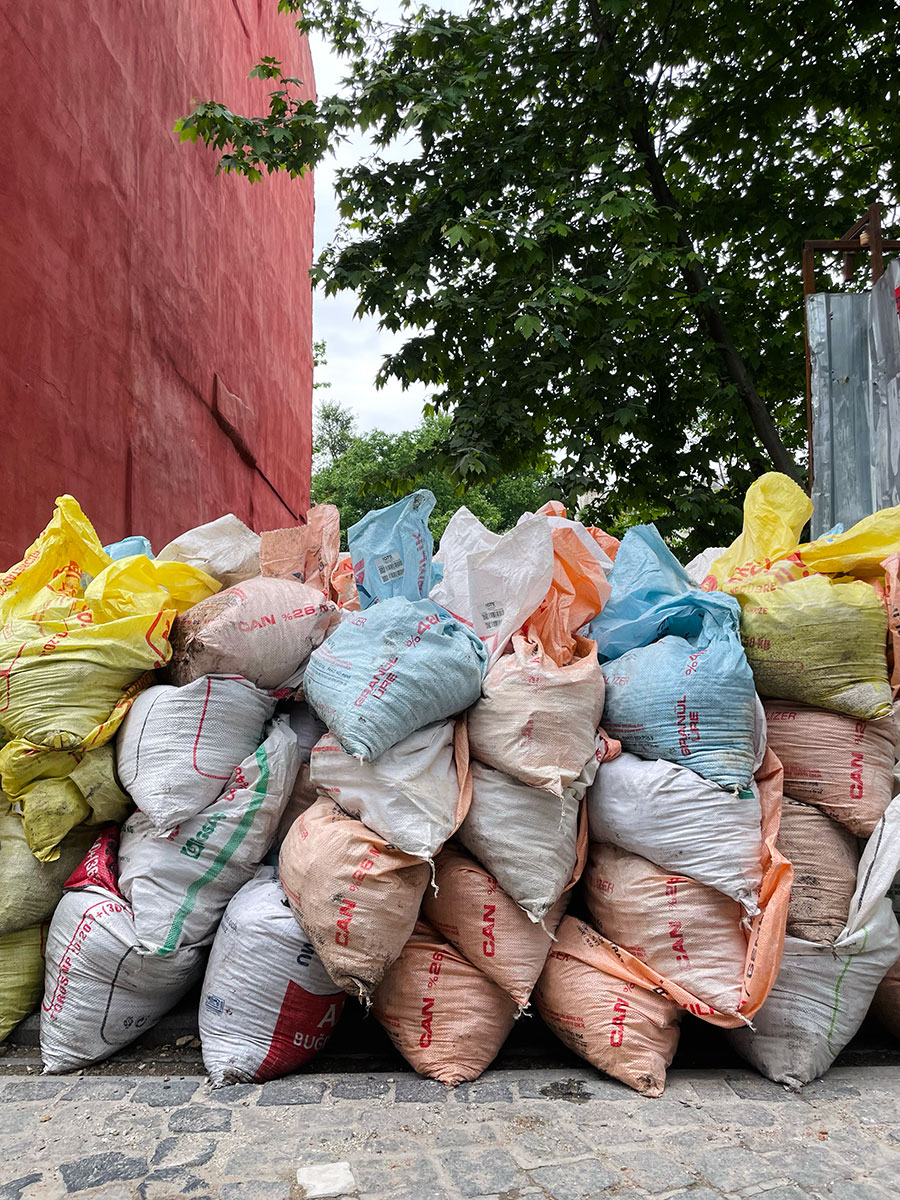
After five or six rejections, this was the first work ever accepted — construction bags against a red wall, shot on an ordinary walk. It felt like being surrounded by digital trash, like the art world itself was just more noise.
View on F-Stop MagazineOpen Theme
Balat, Istanbul After five or six rejections, this was the first work ever accepted — construction bags against a red wall, shot on an ordinary walk. It felt like being surrounded by digital trash, like the art world itself was just more noise.
View on F-Stop MagazineCities
Shot from a window in Moscow, the last summer there. A high-rise at night, a thousand lit windows. It felt like a wall covered in lights — and all I wanted was to get out of the frame. Out of the city. Out of the year.
View on F-Stop MagazineCities
Shot from a window in Moscow, the last summer there. A high-rise at night, a thousand lit windows. It felt like a wall covered in lights — and all I wanted was to get out of the frame. Out of the city. Out of the year.
View on F-Stop Magazine